
Peak generation hours for UK solar panels by season — and the 8-second postcode check that shows your best hours today.
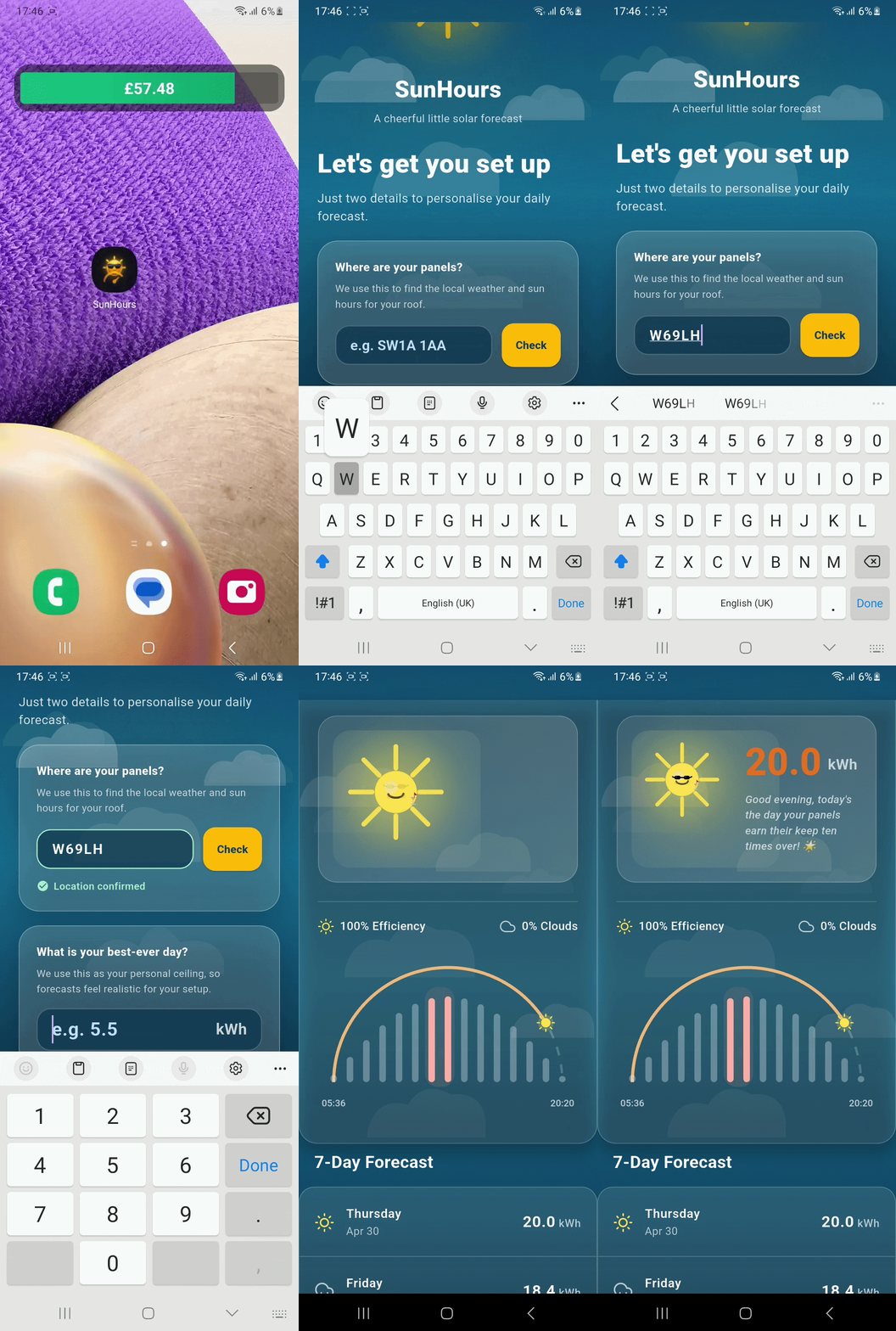
You've got the panels. Now what?
Getting plug-in solar is brilliant right up until the moment you want to know what they're actually doing — and realise there's no obvious way to check.
Your inverter shows a number right now. Your electricity bill will eventually be smaller. But today, at half nine in the morning, should you put the washing on? Or wait until noon when they're really cooking?
That's the question Sun Hours answers. And the setup takes about as long as it takes to brew a tea.
Watch the gif above. That's it. That's the whole thing.
---
Why timing is the difference between £70 and £150 saved
Here's something that doesn't get said clearly enough in the plug-in solar world:
You only benefit from the electricity your panels generate if you're using something at the same time.
When your 800W system is outputting 700W at 11:45am and nothing in your home is drawing power, that energy flows to the grid for around 4p a unit. When your dishwasher is running at the same moment, you've just avoided buying ~£0.17 of electricity.
Do that across a summer and it's the difference between the government's estimate of £70 a year saved and something closer to £150.
The only thing standing between those two numbers is knowing when your peak window is.
---
When are your panels actually most effective?
For most UK locations, the rule of thumb is 10am to 2pm on a clear day — but there's a lot of variation in that rule.
Your latitude: London's midday sun sits higher in the sky than Edinburgh's. A south-facing panel in Bristol sees a longer, stronger peak than the same panel in Glasgow.
Your orientation: South-facing is ideal and peaks closest to noon. East-facing balconies peak earlier (9am–12pm). West-facing ones peak later (12pm–4pm). Somewhere between? Your peak shifts accordingly.
The cloud cover: This is the big one. A partially cloudy Thursday in May could mean your "noon peak" happens at 11am because that's the clearest window. Or it could mean your peak is at 1pm when the cloud shifts. Historical averages don't tell you this. Real weather data for your postcode does.
---
How Sun Hours works in about 8 seconds
Step 1: Download the app.
Step 2: Enter your postcode.
Step 3: Tell Sol your system's best-ever day in kWh. (Check your inverter app — Hoymiles, Deye, Envertech, Marstek, APS. Look for History → Daily → highest number. If you've only just installed, use the NASA calculator at sunhours.app/solaruk for an estimate.)
That's it. No inverter login. No API keys. No account creation.
What you get:
- Today's hourly chart — a curve showing when your panels ramp up, peak, and wind down, in kWh, for your specific system and postcode.
- 7-day view — see which days are worth timing your washing around and which ones to abandon.
- The peak alert — an optional phone notification that fires when your best 2-hour generation window opens. So instead of checking the app, the app tells you when to act.
---
What to actually do with this information
Once you can see your peak window, a few habits change fast:
Dishwasher: Start it an hour before your forecast peak. It'll run through your best generation window.
Washing machine: Same — set it to start at 10am on a high-sun forecast day rather than whenever you notice it needs doing.
Phone and laptop charging: Free. Every day. Plug in during your window and stop drawing from the grid at 25p a unit.
Slow cooker: If your peak is 10am–2pm, this is the move. Start it at 9:55, let it run through your solar window, and come home to a meal that cost you nothing in electricity. It's become genuinely satisfying.
EV charging: If you can time it, do. A 3.7kW charger draws more than a plug-in panel can supply alone, but your solar is still offsetting part of it.
---
Your peak window by UK city (typical, clear spring/summer day)
| City | Typical peak window |
|---|---|
| London | 10:00 – 14:30 |
| Bristol | 10:00 – 14:30 |
| Birmingham | 10:00 – 14:15 |
| Manchester | 10:00 – 14:00 |
| Leeds / Sheffield | 10:00 – 13:45 |
| Newcastle | 09:45 – 13:30 |
| Cardiff | 10:00 – 14:30 |
| Edinburgh | 09:45 – 13:15 |
| Glasgow | 09:45 – 13:00 |
| Cornwall | 10:15 – 15:00 |
These are rough guides for south-facing panels on a clear day. Cloud cover, your specific orientation, and the time of year all shift the window. Sun Hours uses your actual postcode data to show you the exact curve each morning.
---
The gif is the whole tutorial
Most solar apps make you feel like you need a degree to get started. Sun Hours doesn't.
The gif at the top of this post is the entire setup journey. App icon → Sol on your home screen → your forecast ready to go.
Download Sun Hours free on Android →
Sol's got his sunglasses on and your forecast is ready. ☀️

That gif? That's the whole setup.
Download Sun Hours, enter your postcode, tell Sol your best solar day — done. You'll get today's generation curve, a 7-day forecast, and a notification the moment your peak window opens. Free on Android. No account.